
Die vier synthetischen Tests des AS SSD-Benchmarks ermitteln die sequentielle und zufällige Lese- und Schreibgeschwindigkeit unserer Testprobanden. Diese Tests werden ohne Nutzung des Betriebssystem-Caches durchgeführt. In den sequentiellen Tests misst das Programm wie lange es dauert, eine 1 GB große Datei zu lesen respektive zu schreiben. Im 4K-Test wird die Lese- und Schreibleistung bei zufällig ausgewählten 4K-Blöcken ermittelt. Der 4K-64-Thrd-Test entspricht dem 4K-Prozedere, nur dass in diesem Fall die Lese-und Schreiboperationen auf 64 Threads verteilt sind. Damit wird der typische Start eines Programms bzw. Prozesses simuliert.
Zuletzt wird noch die Zugriffszeit der SSD ermittelt, wobei der Zugriff beim Lesen über die gesamte Kapazität der SSD (Fullstroke) ermittelt wird. Der Schreibzugriffstest erfolgt mit einer 1 GB-Testdatei.
| read, Mittelwert | |
| OCZ Vertex 3 Max IOPS, 240 GB | 516,12 |
| OCZ Vertex 3, 240 GB | 512,48 |
| Intel SSD 520, 240 GB | 498,43 |
| Plextor PX-M2S, 256 GB | 425,00 |
| OCZ RevoDrive Hybrid, 1000 GB | 394,20 |
| Intel SSD 510, 120 GB | 365,18 |
| Intel SSD 320, 300 GB | 268,06 |
| Intel SSD 320, 600 GB | 267,54 |
| OCZ Vertex 2 Extended, 120 GB | 207,57 |
| Intel SSD 310 mSATA, 80 GB | 204,01 |
| OCZ Synapse Cache, 64 GB | 200,05 |
| Angaben in MB/sec (mehr ist besser) | |
| write, Mittelwert | |
| Plextor PX-M2S, 256 GB | 290,66 |
| OCZ Vertex 3, 240 GB | 287,80 |
| Intel SSD 520, 240 GB | 284,70 |
| OCZ Vertex 3 Max IOPS, 240 GB | 252,66 |
| Intel SSD 320, 600 GB | 222,07 |
| Intel SSD 320, 300 GB | 221,39 |
| Intel SSD 510, 120 GB | 178,21 |
| OCZ RevoDrive Hybrid, 1000 GB | 143,60 |
| OCZ Vertex 2 Extended, 120 GB | 121,49 |
| Intel SSD 310 mSATA, 80 GB | 80,28 |
| OCZ Synapse Cache, 64 GB | 77,00 |
| Angaben in MB/sec (mehr ist besser) | |
| read, Mittelwert | |
| Intel SSD 520, 240 GB | 21,34 |
| OCZ RevoDrive Hybrid, 1000 GB | 20,80 |
| Intel SSD 310 mSATA, 80 GB | 19,67 |
| OCZ Vertex 3, 240 GB | 19,28 |
| Intel SSD 510, 120 GB | 18,68 |
| Intel SSD 320, 600 GB | 18,61 |
| Intel SSD 320, 300 GB | 18,59 |
| OCZ Vertex 3 Max IOPS, 240 GB | 18,36 |
| OCZ Vertex 2 Extended, 120 GB | 18,04 |
| OCZ Synapse Cache, 64 GB | 17,96 |
| Plextor PX-M2S, 256 GB | 15,28 |
| Angaben in MB/sec (mehr ist besser) | |
| write, Mittelwert | |
| Intel SSD 520, 240 GB | 61,38 |
| OCZ Synapse Cache, 64 GB | 59,02 |
| OCZ RevoDrive Hybrid, 1000 GB | 57,28 |
| OCZ Vertex 3, 240 GB | 56,65 |
| OCZ Vertex 3 Max IOPS, 240 GB | 55,45 |
| Plextor PX-M2S, 256 GB | 40,67 |
| OCZ Vertex 2 Extended, 120 GB | 39,44 |
| Intel SSD 310 mSATA, 80 GB | 38,08 |
| Intel SSD 510, 120 GB | 35,99 |
| Intel SSD 320, 600 GB | 33,77 |
| Intel SSD 320, 300 GB | 33,53 |
| Angaben in MB/sec (mehr ist besser) | |
| read, Mittelwert | |
| OCZ Vertex 3 Max IOPS, 240 GB | 245,90 |
| Intel SSD 520, 240 GB | 229,83 |
| OCZ Vertex 3, 240 GB | 199,82 |
| Intel SSD 310 mSATA, 80 GB | 145,42 |
| Intel SSD 320, 300 GB | 138,22 |
| Intel SSD 320, 600 GB | 137,09 |
| OCZ Vertex 2 Extended, 120 GB | 125,16 |
| OCZ RevoDrive Hybrid, 1000 GB | 117,10 |
| Intel SSD 510, 120 GB | 83,38 |
| Plextor PX-M2S, 256 GB | 74,87 |
| OCZ Synapse Cache, 64 GB | 50,51 |
| Angaben in MB/sec (mehr ist besser) | |
| write, Mittelwert | |
| Intel SSD 520, 240 GB | 223,77 |
| OCZ Vertex 3, 240 GB | 219,72 |
| OCZ Vertex 3 Max IOPS, 240 GB | 190,75 |
| OCZ RevoDrive Hybrid, 1000 GB | 141,99 |
| OCZ Vertex 2 Extended, 120 GB | 99,55 |
| OCZ Synapse Cache, 64 GB | 73,11 |
| Intel SSD 510, 120 GB | 62,44 |
| Intel SSD 320, 300 GB | 60,60 |
| Intel SSD 320, 600 GB | 60,22 |
| Intel SSD 310 mSATA, 80 GB | 55,81 |
| Plextor PX-M2S, 256 GB | 47,29 |
| Angaben in MB/sec (mehr ist besser) | |
| read, Mittelwert | |
| Intel SSD 310 mSATA, 80 GB | 0,08 |
| Intel SSD 320, 300 GB | 0,08 |
| Intel SSD 320, 600 GB | 0,08 |
| Intel SSD 520, 240 GB | 0,13 |
| OCZ Synapse Cache, 64 GB | 0,15 |
| OCZ Vertex 3, 240 GB | 0,15 |
| OCZ Vertex 3 Max IOPS, 240 GB | 0,18 |
| OCZ Vertex 2 Extended, 120 GB | 0,20 |
| Intel SSD 510, 120 GB | 0,21 |
| Plextor PX-M2S, 256 GB | 0,27 |
| OCZ RevoDrive Hybrid, 1000 GB | 17,95 |
| Angaben in Millisekunden (weniger ist besser) | |
| write, Mittelwert | |
| Intel SSD 510, 120 GB | 0,09 |
| Plextor PX-M2S, 256 GB | 0,09 |
| Intel SSD 320, 300 GB | 0,11 |
| Intel SSD 320, 600 GB | 0,11 |
| Intel SSD 310 mSATA, 80 GB | 0,12 |
| OCZ Vertex 3, 240 GB | 0,22 |
| Intel SSD 520, 240 GB | 0,24 |
| OCZ RevoDrive Hybrid, 1000 GB | 0,24 |
| OCZ Vertex 3 Max IOPS, 240 GB | 0,24 |
| OCZ Synapse Cache, 64 GB | 0,27 |
| OCZ Vertex 2 Extended, 120 GB | 2,56 |
| Angaben in Millisekunden (weniger ist besser) | |
Fühlen Sie sich sicher in Ihrem Zuhause? Mehr als jede vierte Person in Deutschland (28,6 %) gab laut der SKiD-Dunkelfeldstudie...
Für viele Freizeitläuferinnen und -läufer ist nicht das Training selbst die größte organisatorische Herausforderung. Schwieriger ist der Übergang zwischen Arbeit,...
ASUS bringt die Creator-Laptops ProArt P14 (H7407) und P16 (H7607) mit Nvidia RTX Spark ab sofort in Deutschland auf den...
ASUS Republic of Gamers (ROG) startet den Verkauf des ROG Xbox Ally X20. Der Gaming-Handheld kombiniert ein durchscheinendes schwarzes Gehäuse...
Mit dem AGON PRO AG326UZD2 bringt AOC einen Gaming-Monitor auf den Markt, der anspruchsvolle Spieler mit einer Kombination aus hoher...
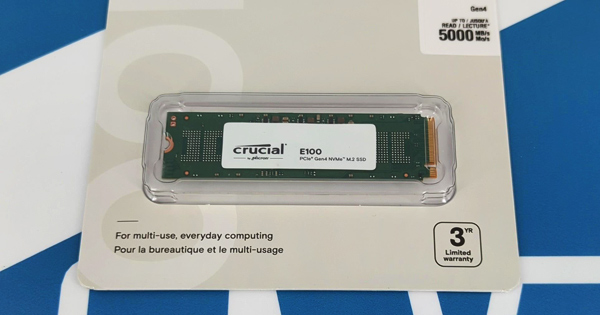
Die E100-SSD von Crucial basiert auf einem PCIe Gen4 Interface und QLC-Flashspeicher von Micron. Die Serie zielt auf Ein- und Umsteiger in die SSD-Welt ab. Wir haben uns das 1-TB-Modell im Test angesehen.
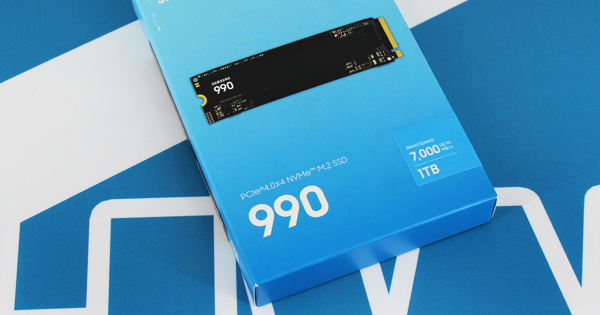
Mit der SSD-990-Familie stellt Samsung eine neue Serie von SSDs für Einsteiger vor. Wie sich die Kombination aus PCI Express Gen4 und QLC-Flashspeicher in der Praxis schlägt, klären wir am 1-TB-Modell.
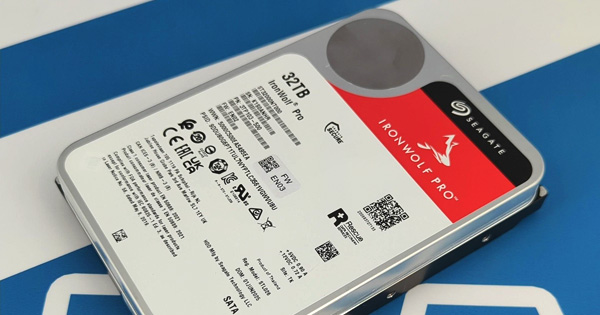
Die Familie der IronWolf Pro Festplatten von Hersteller Seagate adressiert vor allem NAS-Systeme im Profi-Segment. Wir haben uns das aktuelle Flaggschiff der CMR-Plattform mit satten 32 TB im Praxistest zur Brust genommen.