

Hat man doch erst vor kurzer Zeit die neuen DDR500 bzw. PC4000 Module vorgestellt, setzt Hersteller GEIL nun noch einen oben drauf und liefert PC4200 alias DDR533 Riegel. Die Dual-Channel Kits sind in 512 MB und 1 GB Varianten erhätlich und lassen sich laut Spezifikationen mit bis zu 266 MHz Takt betreiben. Bei einer Spannung zwischen 2,6 und 2,95 Volt sollen Timings von 3.0-4-4-8 möglich sein. Zwar sind diese nicht besonder scharf, doch werden die langsamen Timings durch den hohen Speicherdurchsatz kompensiert. Auch hier wurde ein Kupferheatspreader angebracht. Genaue Preise sind noch nicht bekannt...
"GeIL Corp, as one of the top memory manufacture for high-performance DDR memory, is proud to announce the release of PC4000 (500MHz) / PC4200 (533MHz) Platinum Series Dual Channel DDR Kits. The outrageous speed is achieving by GeIL 3.5ns TSOP memory chips and platinum copper heat spreader. Unlike other PC4000 rated at CAS 3, GeIL PC4000 is rated at CAS 2.5!
With the advanced Dual Channel DDR technology from Intel´s 875/865 chipsets, we are proud that our newest GeIL PC4000/PC4200 Platinum is ready to take the full advantages of Intel´s new technology. As for our PC4200 Ultra Platinum which is capable of running at the speed of 533MHz, it would be by far the fastest DDR memory module available in the market now. The PC4000 / PC4200 would be available only in Dual Channel DDR Ultra Platinum Kits..."
KIOXIA hat mit der LD4-Serie seine ersten SSDs im E1.L-Formfaktor auf Basis der achten Generation des BiCS FLASH QLC vorgestellt....
devolo bringt mit dem WiFi 7 BE9300 einen neuen Tri-Band-Router auf den Markt, der sich als Ethernet-Router für Glasfaseranschlüsse, Access...
BenQ erweitert seine MOBIUZ-Serie um den EX271QMZ. Der 26,5 Zoll große Gaming-Monitor setzt auf ein QD-OLED-Panel der dritten Generation mit...
Mit der E100 1 TB SSD hält Crucial eine preisorientierte NVMe-SSD mit PCIe 4.0 x4 bereit. Das M.2-2280-Laufwerk soll laut...
Im zurückliegenden Monat gab es wieder einige spannende Themen im Bereich Newsmeldungen sowie interessante Artikel und Produkttests. Folgend möchten wir...
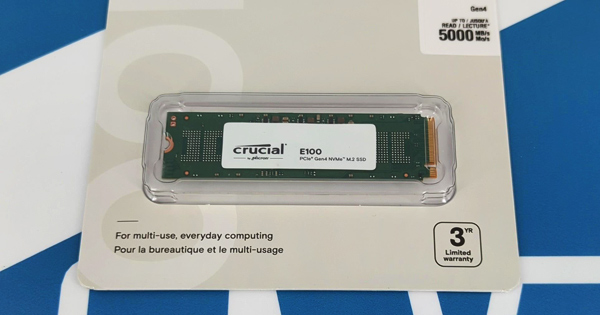
Die E100-SSD von Crucial basiert auf einem PCIe Gen4 Interface und QLC-Flashspeicher von Micron. Die Serie zielt auf Ein- und Umsteiger in die SSD-Welt ab. Wir haben uns das 1-TB-Modell im Test angesehen.
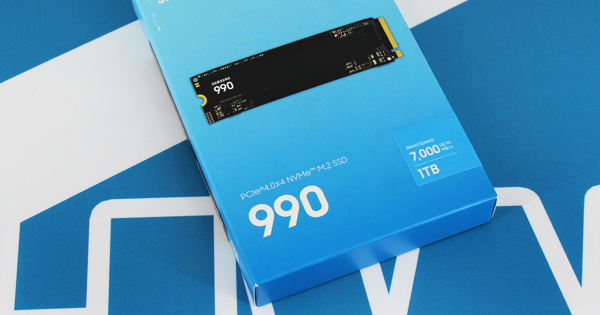
Mit der SSD-990-Familie stellt Samsung eine neue Serie von SSDs für Einsteiger vor. Wie sich die Kombination aus PCI Express Gen4 und QLC-Flashspeicher in der Praxis schlägt, klären wir am 1-TB-Modell.